

 " alt="Private City & Waterfall Tour" width="21" height="22">


 " alt="Private City & Harbour Tour" width="21" height="22">
 " alt="Private City & Nature Tour" width="21" height="22">
 " alt="City & Waterfall Tour" width="21" height="22">


February 11, 2026
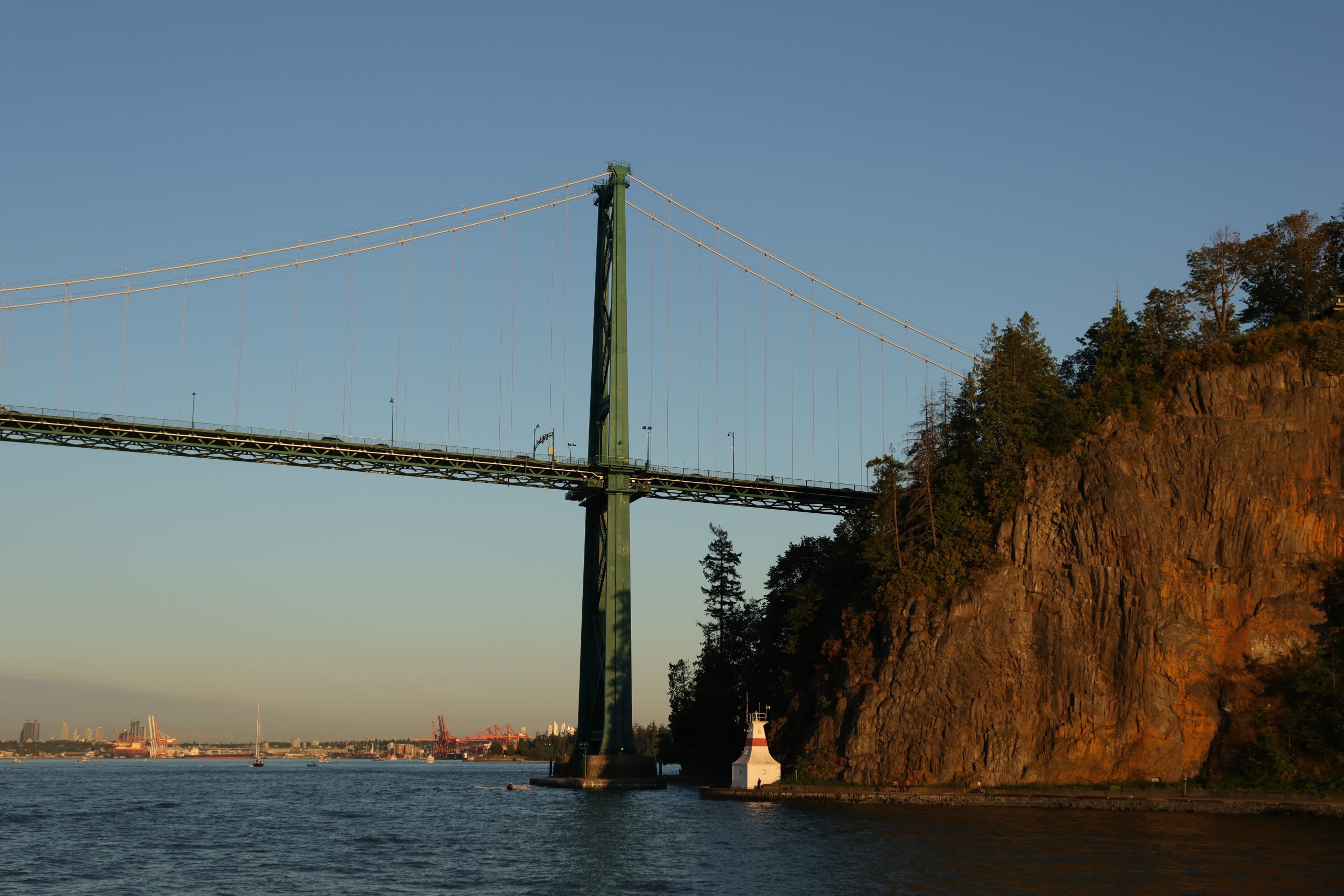
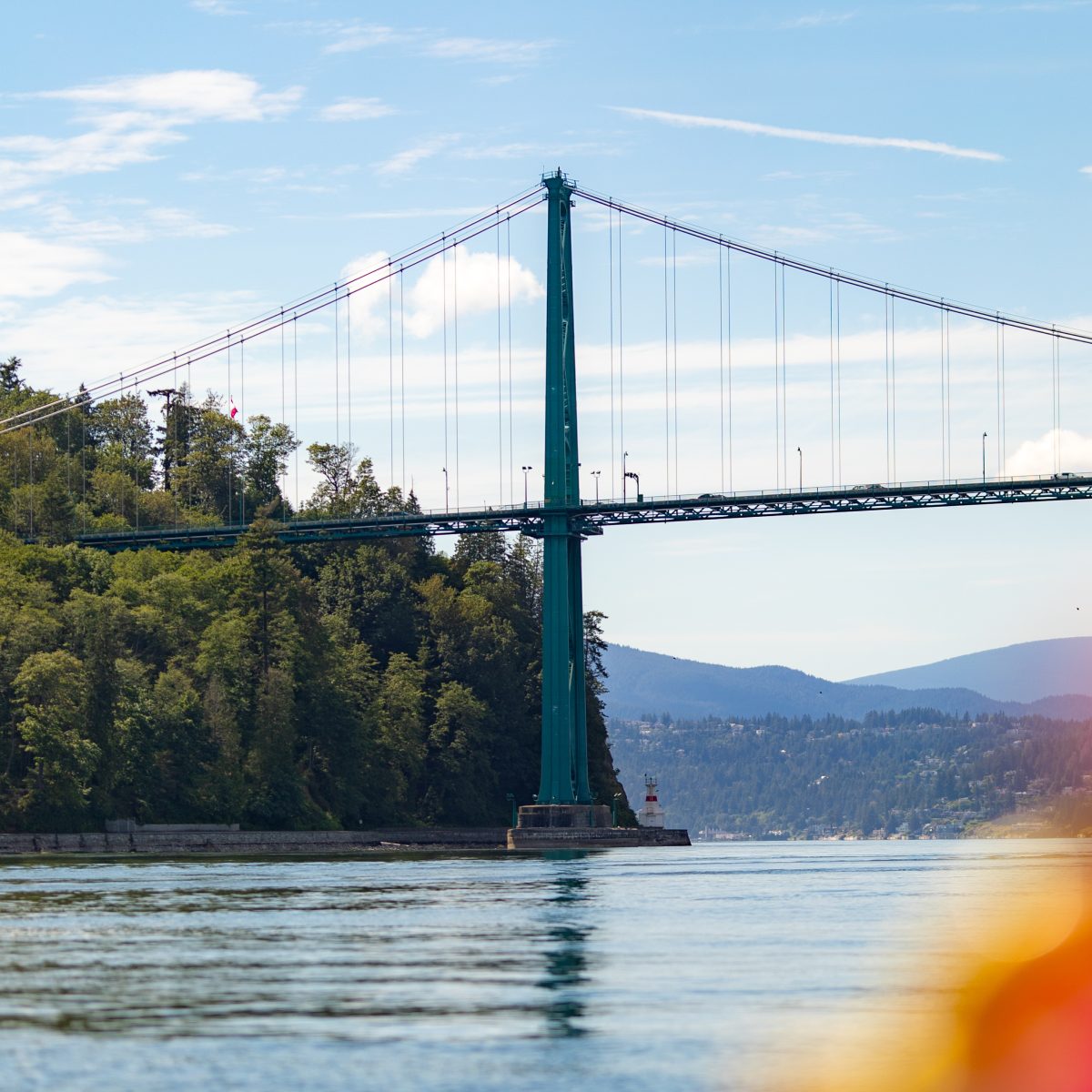
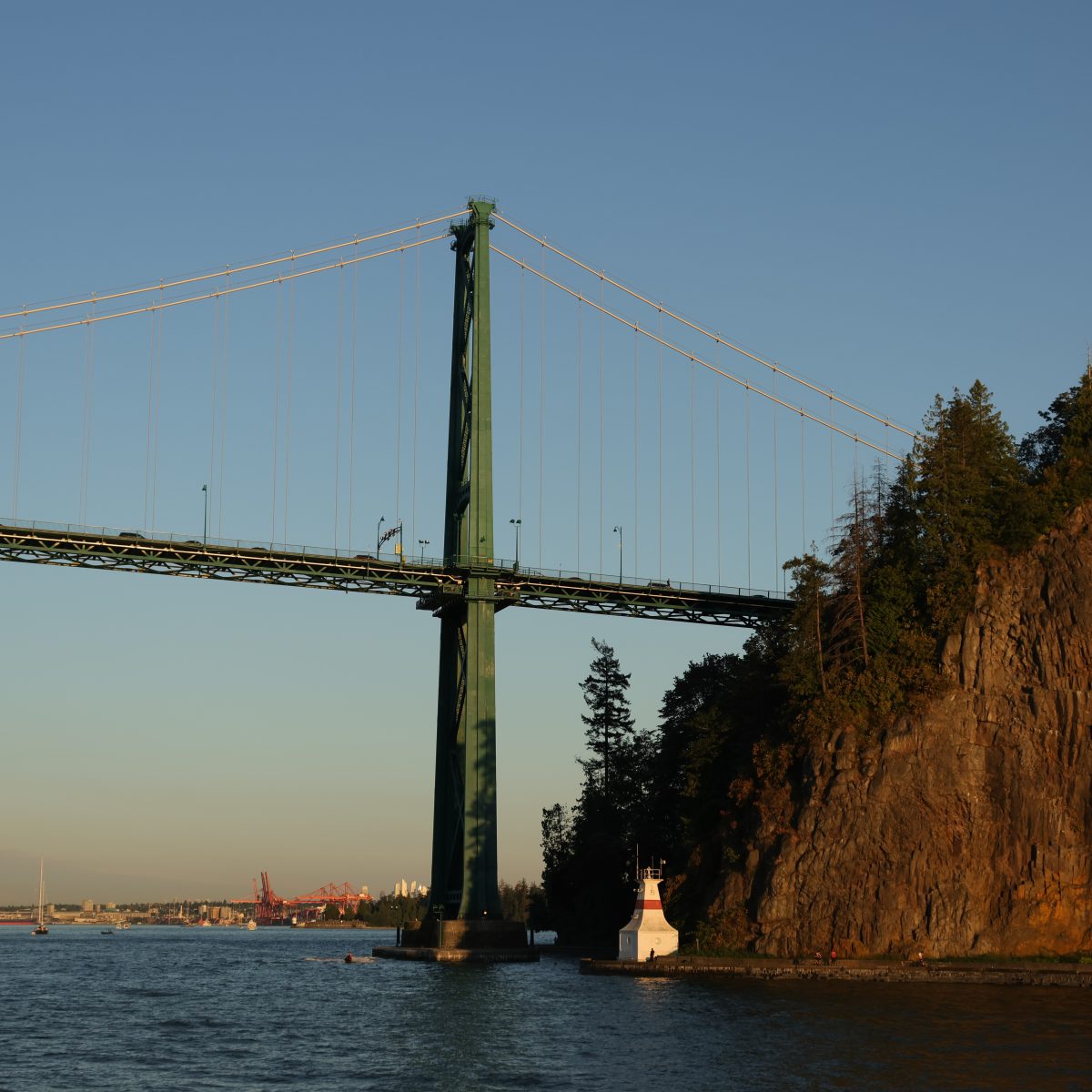
Gliding through Burrard Inlet, few landmarks command attention quite like the Lions Gate Bridge. From the water, its soaring towers, sweeping cables, and dramatic setting at the First Narrows tell a story of ambition and transformation. This iconic crossing is far more than a traffic route, it is a living monument to suspension bridge engineering, layered history, and Vancouver’s connection to the North Shore.
A Gateway at the First Narrows
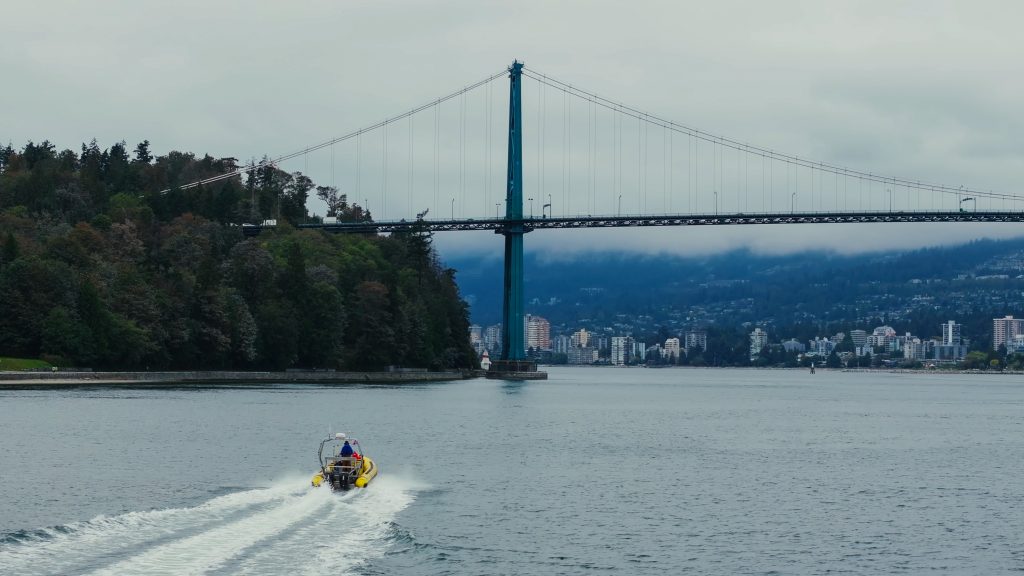
The Lions Gate Bridge, opened in 1938 and officially known as the First Narrows Bridge, is a suspension bridge that crosses the first narrows of Burrard Inlet and connects the City of Vancouver, British Columbia, to the municipalities of North Vancouver, and West Vancouver.
This narrow stretch of water has always been a critical passage. Long before steel and concrete defined the shoreline, the area was deeply tied to First Nations heritage, serving as a place of travel, trade, and cultural significance. Viewing the bridge from the water offers a rare chance to appreciate how modern infrastructure overlays thousands of years of human history.
The name itself is rooted in the landscape. The term “Lions Gate” refers to being a gateway to the Lions, a pair of mountain peaks north of Vancouver. These peaks frame the bridge beautifully when seen from the inlet, reinforcing the sense that this crossing is a gateway between city, sea, and mountains.
The Vision Behind the Bridge
The idea of spanning the First Narrows dates back to the late 19th century. In 1890, George Grant Mackay publicly imagined a bridge connecting Vancouver to the North Shore, though for decades it remained only a vision. A ferry service operated between Ambleside and Gastown from 1909 to 1947, but as Vancouver grew, it became clear that a permanent crossing was essential.
That momentum arrived in the 1930s, driven largely by engineer Alfred James Towle Taylor and the involvement of the Guinness family. Walter Guinness, part of the famed Irish brewing dynasty, saw the potential of the largely undeveloped North Shore. The family invested heavily in North Shore land, believing a bridge at the First Narrows would unlock access, encourage settlement, and shape the region’s future. Their backing transformed the bridge from an ambitious idea into a viable project and cemented its role as a lasting North Shore connection.
Construction began in March 1937, and the bridge opened to traffic on November 14, 1938. While its engineering was impressive, the bridge’s deeper story lies in how private investment and public infrastructure reshaped the city. The Guinness family financed the bridge and operated it as a toll crossing for decades, directly influencing patterns of growth, commuting, and development on the North Shore.
Adding a final symbolic touch, a pair of cast concrete lions, designed by sculptor Charles Marega, were placed at the south approach in January 1939. They reflected both the bridge’s name and its role as a grand gateway.
Seeing the Lions Gate Bridge from the Water
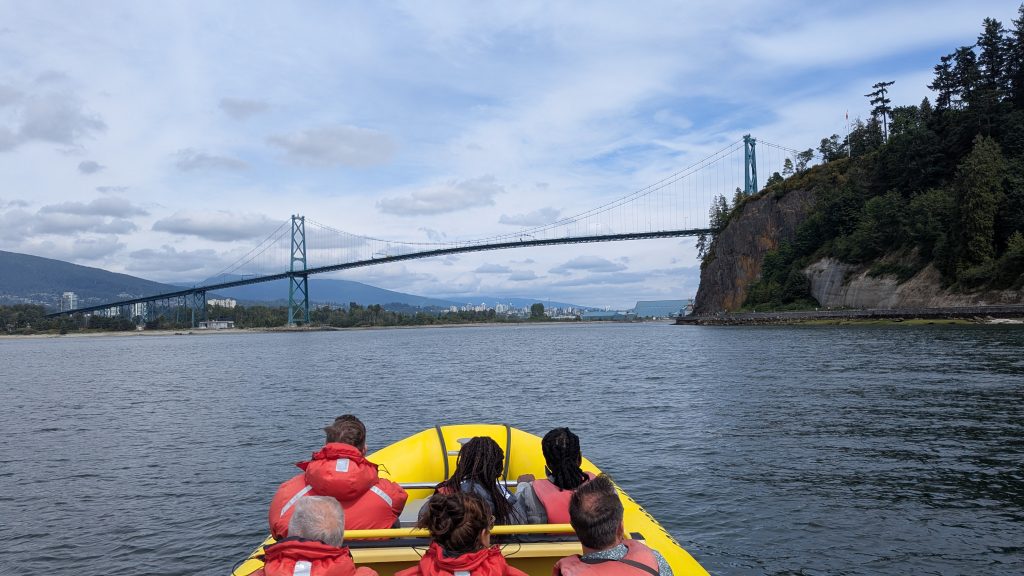
Experiencing the Lions Gate Bridge from the water reveals details often missed from the roadway: the immense scale of its towers, the elegance of its suspension cables, and its commanding position at the First Narrows. It is here that history, engineering, and natural beauty intersect most clearly.
From First Nations heritage to 1938 construction, from Guinness-funded ambition to modern innovation, the Lions Gate Bridge stands as a powerful reminder of how Vancouver grew, and how the sea has always been central to that story.